

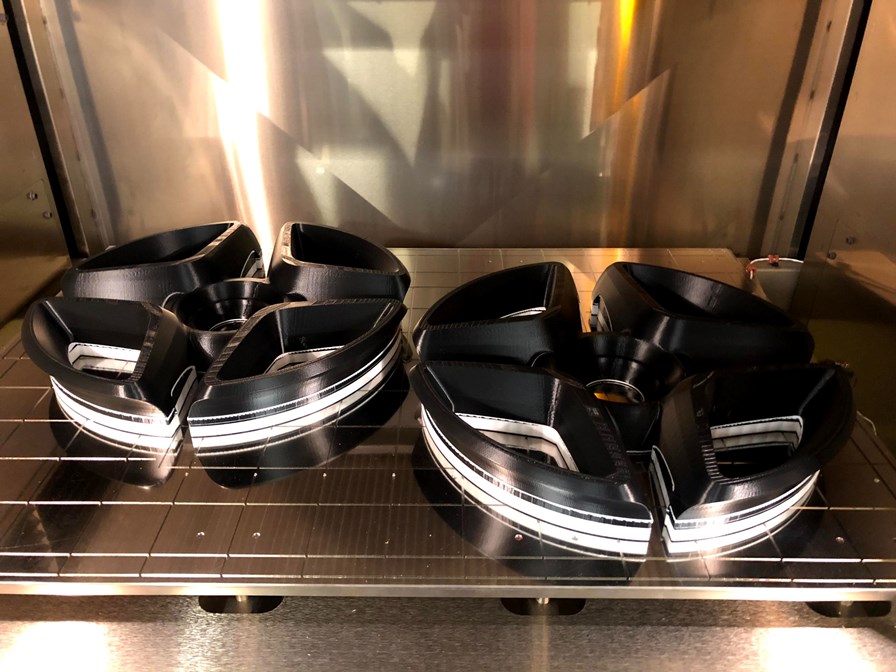




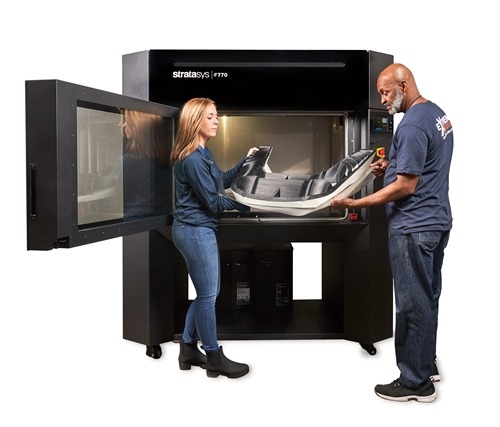
Stratasys has introduced a new large-format FDM ® 3D printer for manufacturers . The Stratasys F770™ 3D printer features the longest fully heated build chamber on the market. Measuring 1171 millimeters diagonally, it offers a spacious build volume of more than 370 liters, opening up new possibilities for industrial manufacturing, prototyping, and production-line part applications . The F770 3D printer is available to order now and is expected to ship in late June.
The F770 uses standard thermoplastics and a soluble support material. This allows for the design and 3D printing of complex internal structures with minimal rework. In addition, the integrated GrabCAD Print™ software allows for 3D printing directly from CAD files, even for large, complex parts. The device can also be connected to enterprise management systems via the MTConnect standard and the GrabCAD Software Development Kit. The mobile device monitoring system and built-in camera enable 24/7 remote operation. It provides up to 140 hours of unattended printing, 7 days a week, without changing materials.
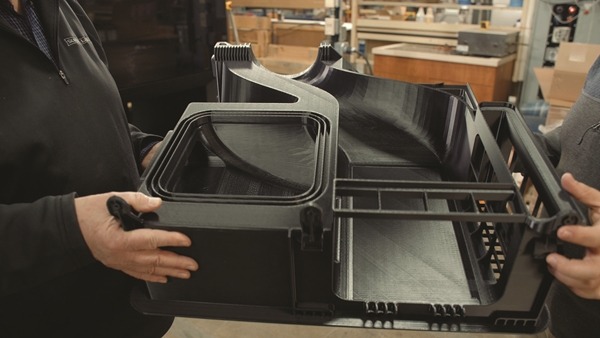
Sub-Zero Group Inc., a luxury appliance manufacturer in the US, was one of the beta testers of the F770. Doug Steindl, head of the company’s development lab, said the 3D printer helps it keep larger parts in-house, saving 30 to 40 percent. “Our 3D printing lab is faced with building a new product every six weeks. The faster we can get things done, the better! And the fastest way to do that is to keep as much of the work in-house as possible. The F770 fits that need.”
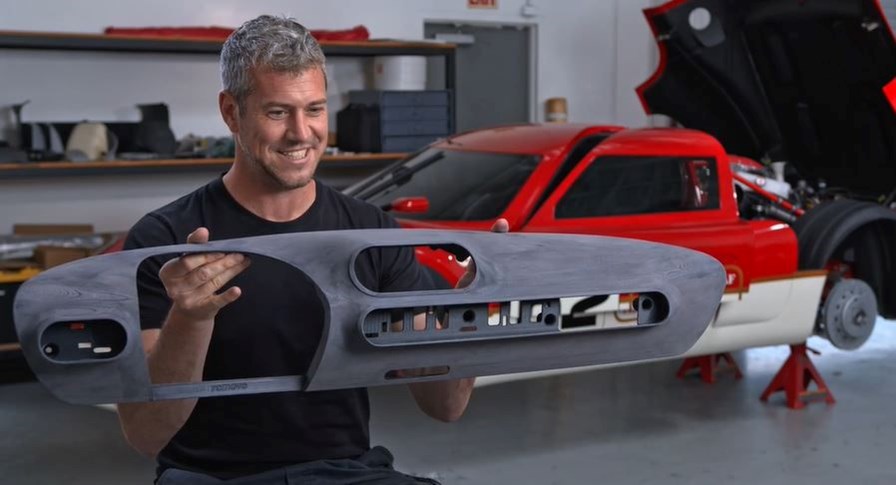
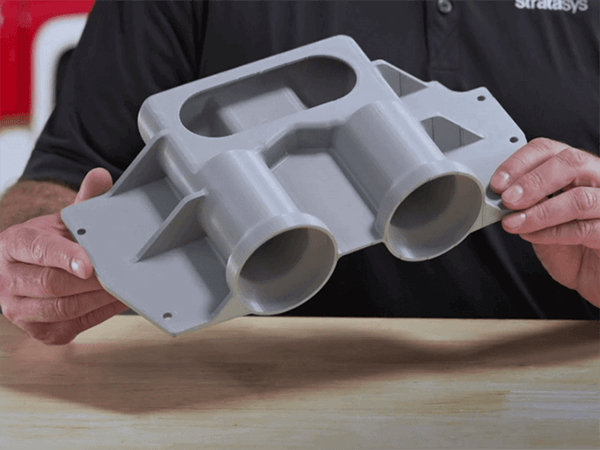
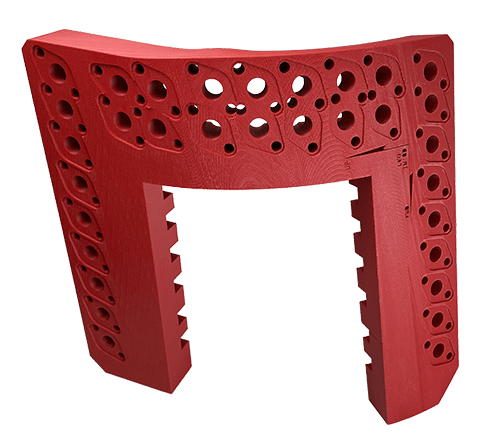
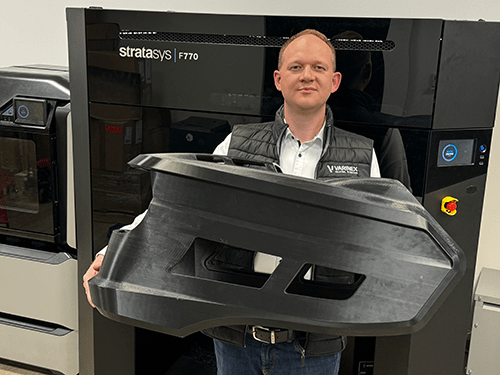
The F770 helps manufacturers eliminate the high cost and long lead times of traditional machining, the complexity of some high-end 3D printers, and the poor quality and hidden costs of many other low-end large-format 3D printers on the market. The F770 offers the intuitive interface and ease of use of the Stratasys F123 series, in jumbo size. The system has an accuracy of better than 0.25 mm on the XY axis and a build space of 1000 x 610 x 610 mm. Its key applications include large-scale jigs and fixtures, bulky functional prototypes such as vehicle panels, and large print trays full of small-scale production line parts.
“It’s time to think big,” said Dick Anderson, vice president of Stratasys Manufacturing. “As 3D printing becomes more common in manufacturing plants, this machine will make it possible for them to 3D print large-scale or high-volume parts. However, our experience with the world’s leading companies has taught us that quality parts are non-negotiable, and that labor productivity and capital costs are essential for competitive advantage. We built the F770 to flawlessly meet all manufacturing requirements.
The Stratasys F770 3D printer is available in ivory ASA and black ABS-M30™ base materials, and SR-30™ soluble support material.