
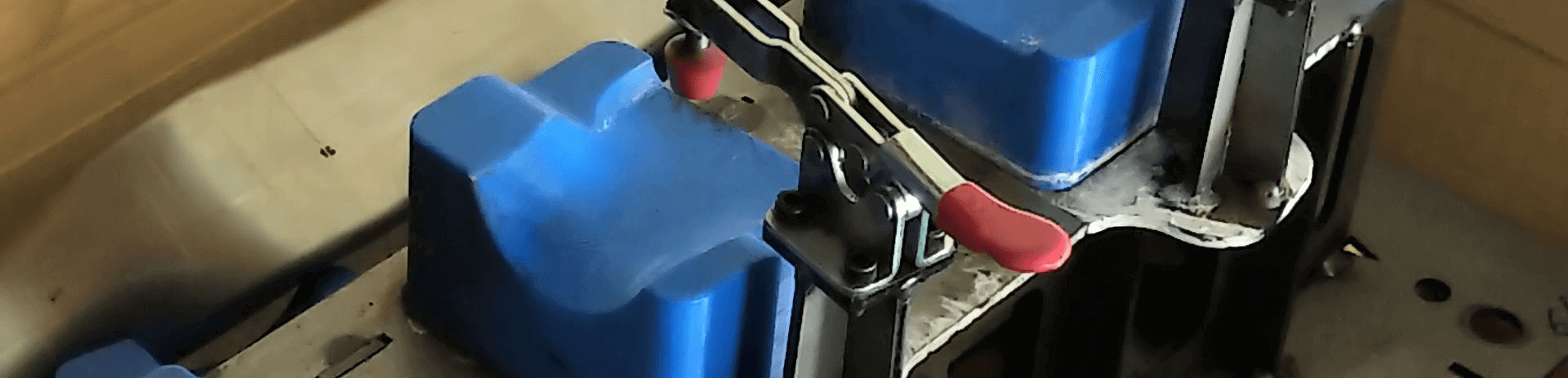
In-line clamping devices with additive manufacturing - Mawe Presstec case study
With 30 years of experience in sheet metal manufacturing, the German company Mawe Presstec GmbH offers customized solutions for key sectors such as aerospace, automotive, medical device manufacturing, mechanical engineering and construction. In order to produce high-quality – often customized – products, customized tools and clamping devices for various machines and production processes are essential.
Remodeling the manufacturing plant
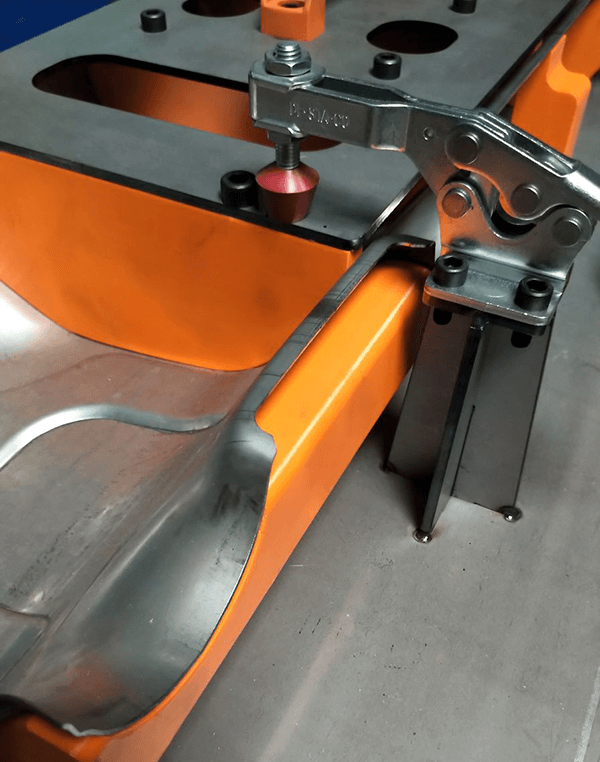
Mawe Presstec realized that it was time-consuming and expensive to produce, reorder or replace tools and fixtures, which were typically made from different metals, such as aluminum. This prompted the company to look for alternative manufacturing technologies. Recognizing the benefits of additive manufacturing, Managing Director Marco Werling invested in a Stratasys F170™ industrial 3D printer to produce custom fixtures and tools in-house.
The results, Werling explained, were astonishing. Mawe Presstec significantly shortened development cycles and processes by 3D printing clamping devices and tools for production line machines from thermoplastics.
“Additive manufacturing with the Stratasys F170 system has reduced part lead times and streamlined the entire development process in our factory,” said the CEO. “Making fixtures from advanced thermoplastics saves us a huge amount of time – up to 50% for some parts – while also providing a higher level of customization and flexibility. The F170 can operate 24 hours a day – which means greater productivity and non-stop printing capacity.”
Mawe Presstec’s sheet metal fabrication projects often require custom fixtures to achieve specific geometries and designs. These fixtures need to be updated regularly to meet the requirements of the job. A good example of this is one of the production line fixtures that needed to be modified to accommodate hinges. This would normally be manufactured in multiple steps or sourced from an external source, but Mawe Presstec was able to produce the hinged fixture in a single print run on the F170.
Reducing the manufacturing cost of clamping devices
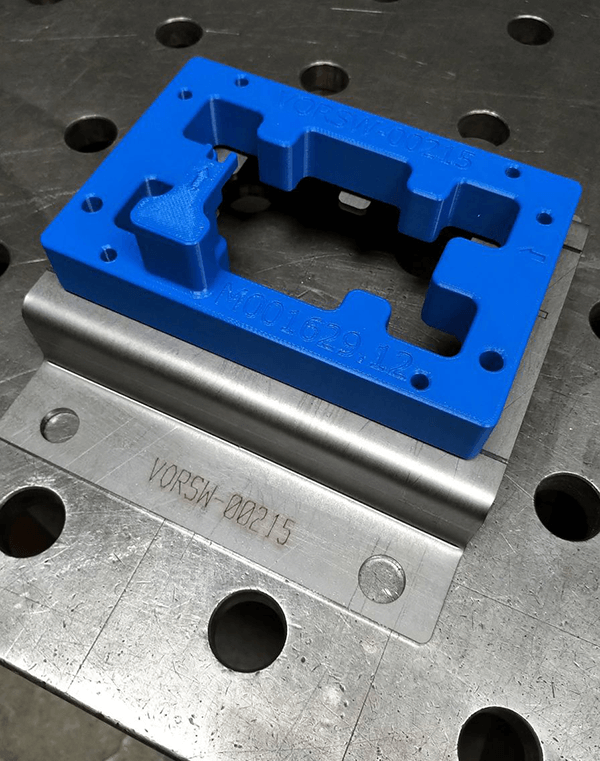
The Stratasys F170 has delivered significant time savings since its installation and has also helped Mawe Presstec achieve its goal of reducing manufacturing costs. Replacing metal fixture and tooling on the production line with additively manufactured alternatives has reduced the cost per part and has also proven to be a useful solution for handling sheet metal parts.
“We are achieving a cost savings of 20-30% per part, simply by reducing material costs compared to the metal previously used to manufacture the clamping devices,” said Werling. “With additive manufacturing, we are also reducing material waste.”
Mawe Presstec chose engineering ABS for its printing tasks, which meets all the criteria for fixture manufacturing. These devices require a high degree of durability and impact resistance to withstand the forces exerted on them during the manufacturing process. At the same time, heat resistance and geometric accuracy are also required for the efficient operation of the manufacturing devices.
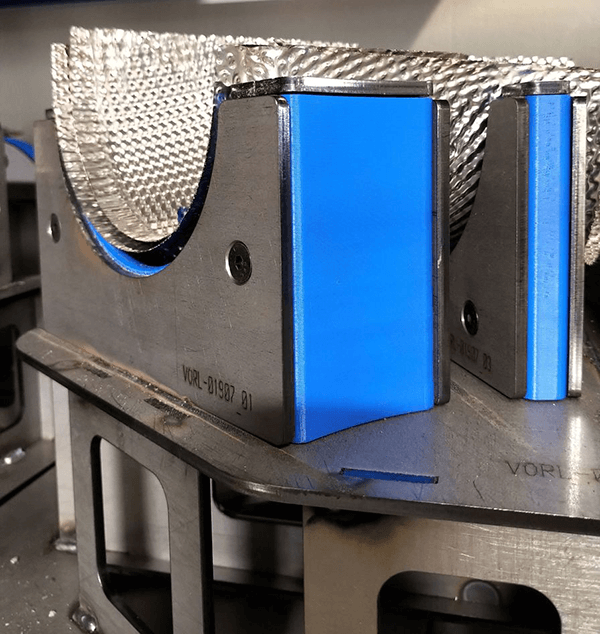
The properties of FDM ABS provide additional benefits for fixtures that come into contact with polished metal products. During the bending and forming stages of manufacturing, metal fixtures would scratch the polished surface of the products. However, the stiffness-to-softness ratio of ABS eliminates this problem. Additionally, using GrabCAD Print™ Advanced FDM utility, production line fixtures can be printed without seams on the surfaces that come into contact with the workpiece, ensuring a smooth, scratch-free surface.
Accelerating the design cycle with 3D printing
In addition to the successful use of FDM ABS thermoplastic, Mawe Presstec has also expanded the use of the F170 3D printer to prototyping. As Werling explained, this has significantly contributed to making product prototypes easier to visualize designs for potential and existing customers. Complex design needs are much faster to analyze and solve with a physical prototype, and the entire sales process is accelerated.
“The F170 has had a positive impact on our services, as we can effectively use 3D printed prototypes in sales meetings and design reviews,” added Werling. “Another great tool to shorten the product design cycle is GrabCAD Print software, which allows us to quickly and easily send CAD files to the 3D printer. GrabCAD software has made the design phase of our in-house manufacturing much more convenient and streamlined.”
Mawe Presstec has seamlessly integrated the Stratasys F170 3D printer into the production of tools and in-line fixtures, as well as into the company’s prototyping requirements. The machine is a valuable addition to the machine park, expanding the company’s manufacturing capabilities and allowing Mawe Presstec’s specialists to focus on what matters most: producing the best possible sheet metal products for their customers.
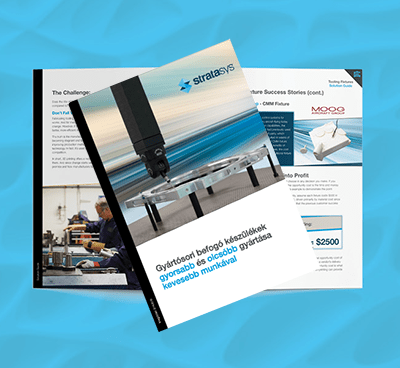
Learn how additive manufacturing can bring new momentum to the fixture manufacturing process while increasing time and cost savings!
Download the 12-page, Hungarian-language
FASTER AND CHEAPER PRODUCTION OF PRODUCTION LINE HOLDING DEVICES
titled!