
Stratasys F870: new large-format FDM 3D printer for manufacturing
Stratasys has unveiled its latest industrial FDM 3D printer, the F870, at the IMTS 2026 – International Manufacturing Technology Show in Chicago. The new system, presented at one of the world’s leading manufacturing technology trade shows, clearly focused on real-world manufacturing challenges: higher productivity, more flexible manufacturing, and long, minimal-interference operation.
Large-format 3D printing is moving beyond prototyping in more and more areas. For manufacturing equipment, templates, robot arm end tools, maintenance aids, or even end-use parts, it's no longer just about how big the part fits in the printer. Speed, dimensional accuracy, material selection, and the system's ability to operate reliably over long production cycles are just as important.
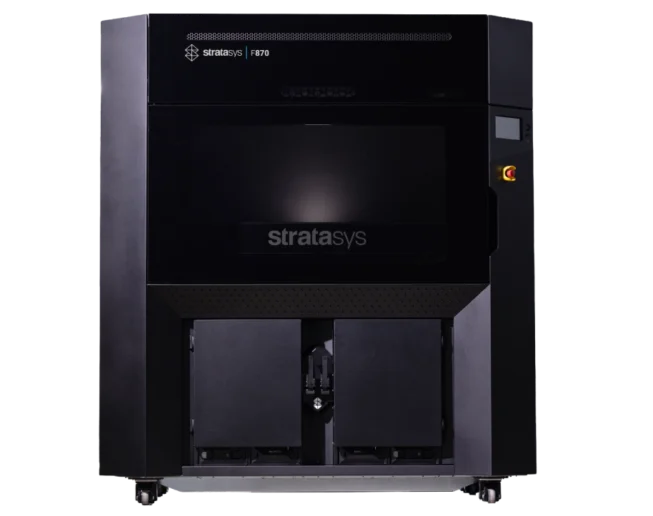
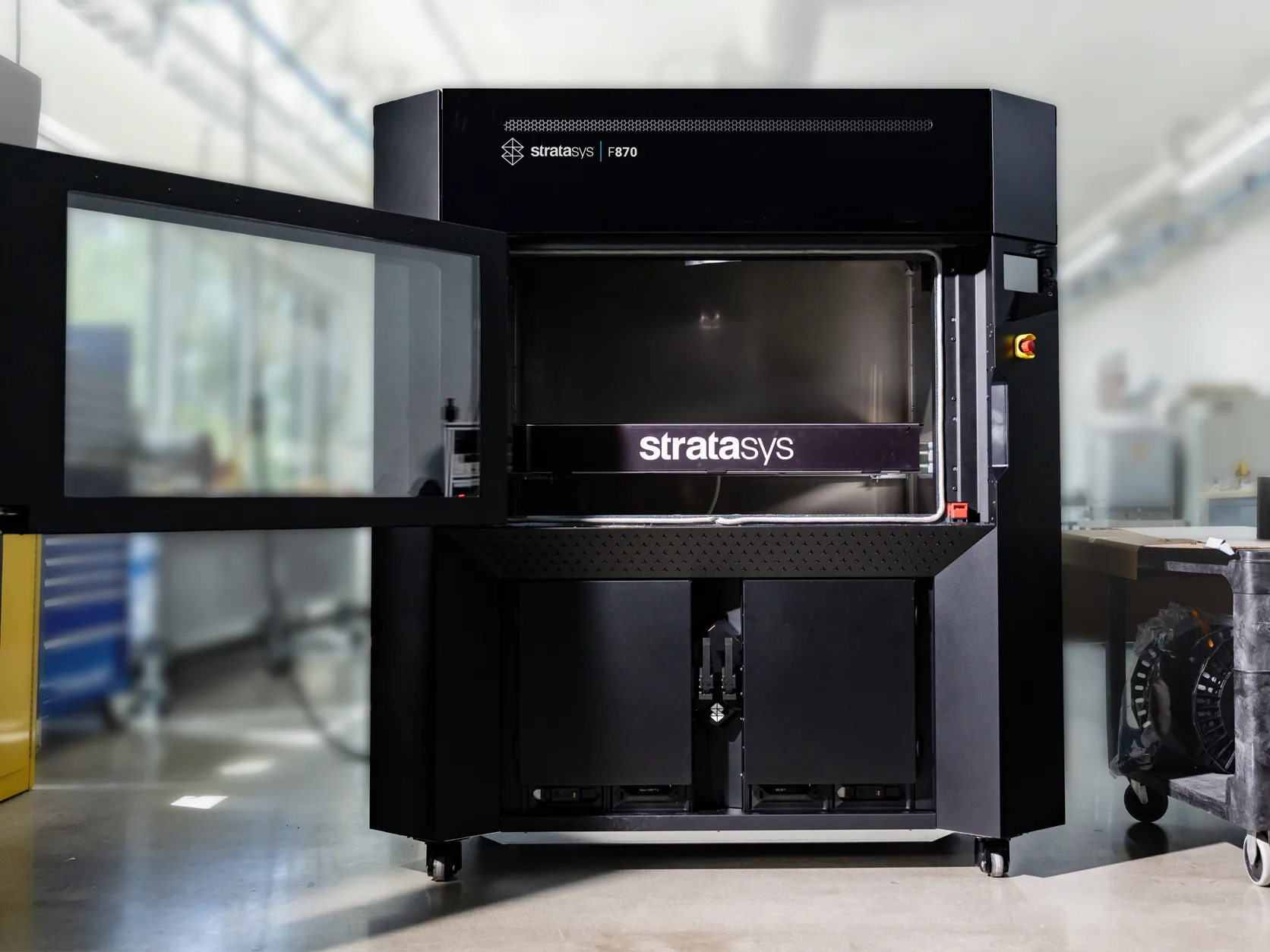
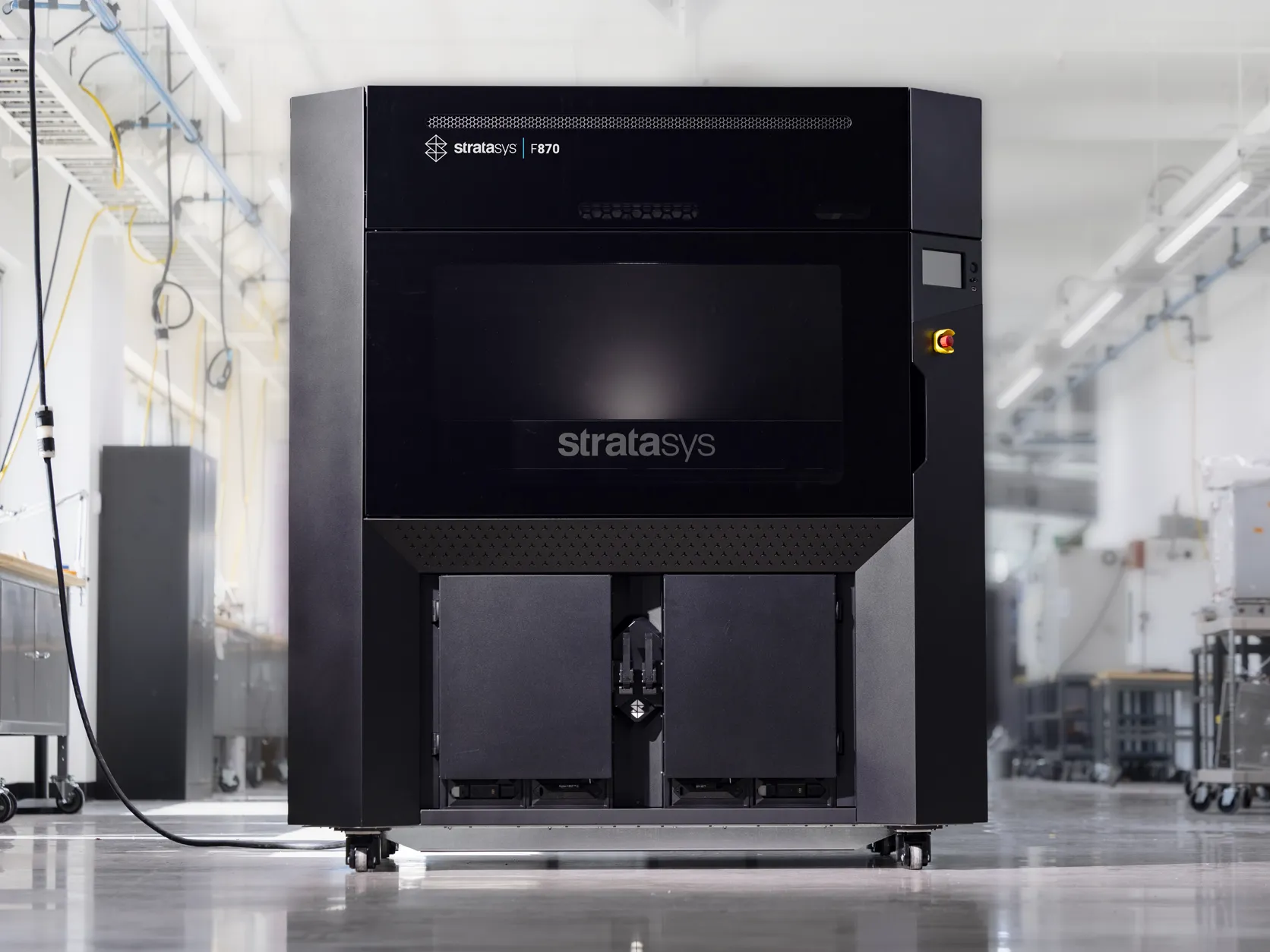
The latest member of the Stratasys FDM product line, the F870 industrial 3D printer , arrives for this manufacturing environment .
The F870 builds on the familiar large-format FDM platform, but its capabilities have been specifically tailored to the demands of the factory environment. The result is a system that enables large-scale, robust and accurate manufacturing aids, fixtures, functional prototypes and parts to be produced in-house, on demand.
Large workspace – but it's not just size that matters
The F870 a build volume of 1000 × 610 × 610 mm with a capacity of 372 liters . By placing the component diagonally, a maximum length of up to 1171 mm can be achieved.
This in itself creates the opportunity to produce large components in one piece, which would have to be broken down into several parts on smaller systems and then assembled afterwards.
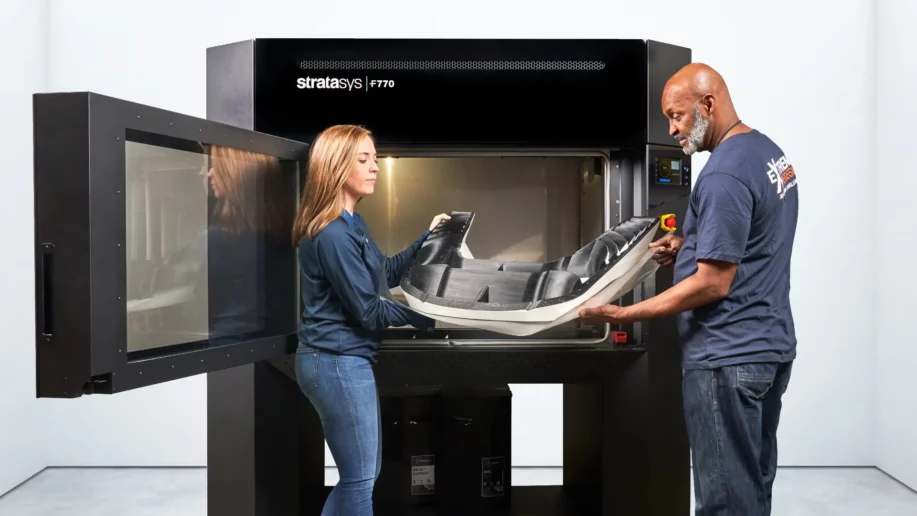
The real innovation of the F870, however, is not simply the size of the build space. Compared to the F770, we do not get a larger workspace: the build volume of the two systems is the same. A significant part of the developments of the F870 are aimed at using this size with greater productivity, wider application possibilities and longer unattended operation
Up to two weeks of continuous printing
With an industrial 3D printer, it is particularly important that long production processes require as little operator intervention as possible.
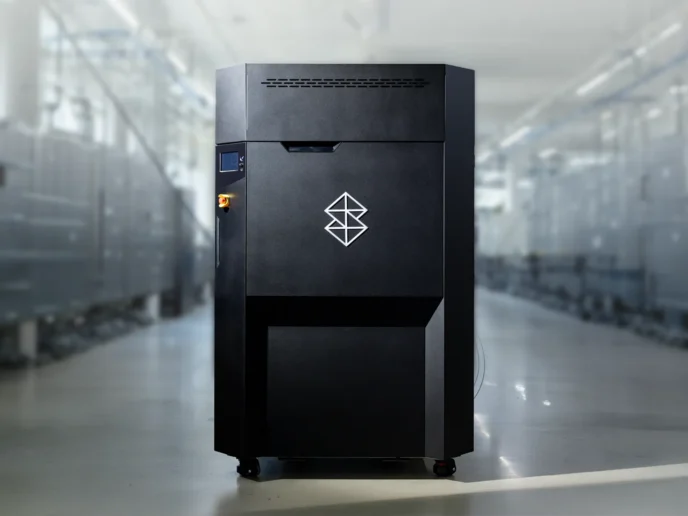
The F870 handles four rolls of 4100 cm³ of material and can automatically switch between them, allowing the system to print continuously for up to two weeks without requiring operator intervention to change the material.
The rolls are also the same as the stock rolls used by the Stratasys F3300, allowing for simpler inventory management and more flexible stock usage for companies with multiple Stratasys FDM systems.
It also takes care of the condition of the raw material
For long printing cycles, it is not enough to provide a large amount of raw materials. Its condition must also be constantly maintained at an adequate level.
The F870 therefore an integrated substrate drying system . The four built-in drying compartments help maintain the substrate in the proper condition, contributing to consistent and repeatable printing results.
This is combined with a fully heated build chamber up to 95°C, which provides a controlled temperature environment across the entire 1000 mm long build space. This is especially important for large components, where temperature differences can cause warping and dimensional accuracy issues.
Three new printheads for different production tasks
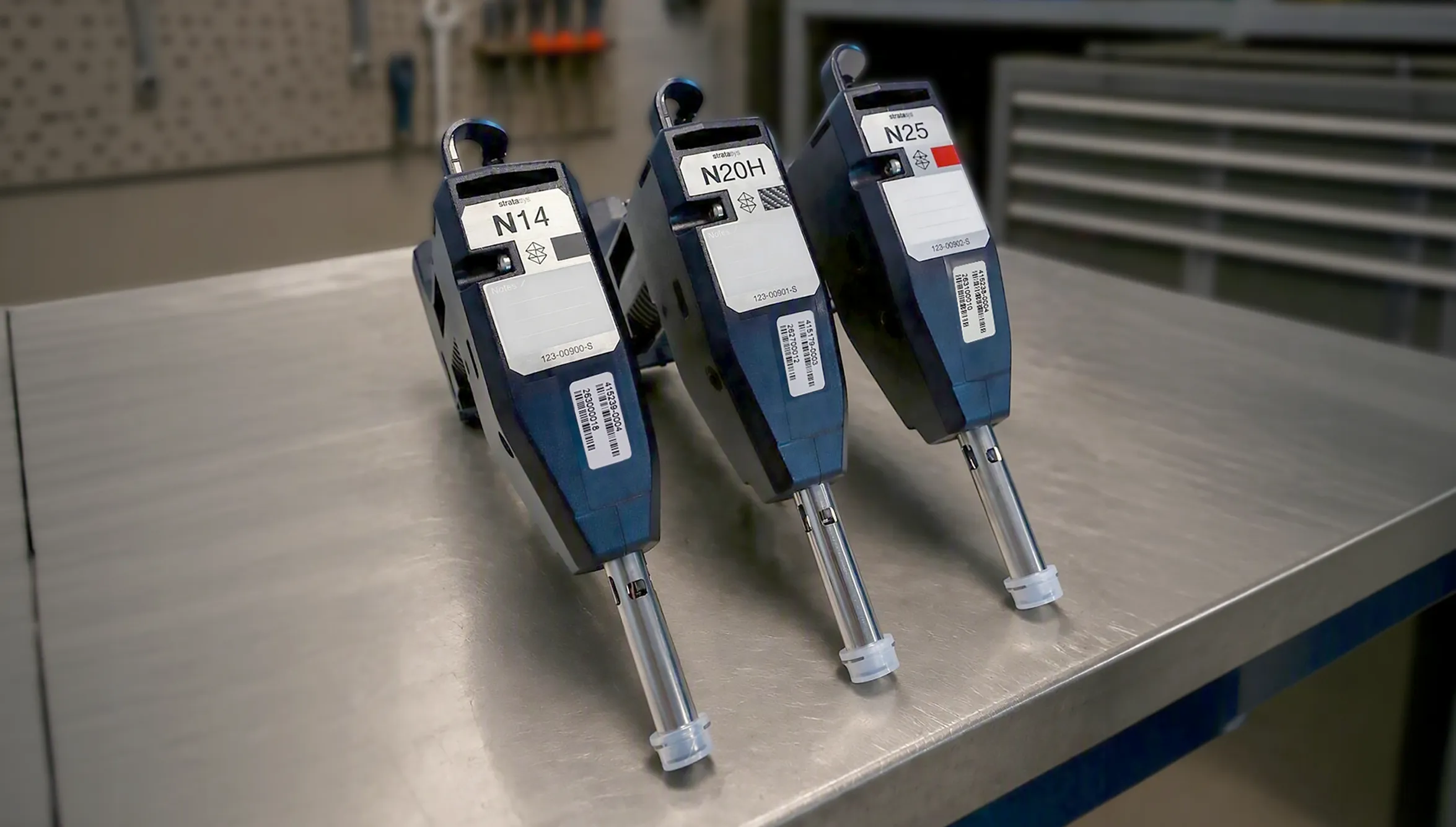
Not all applications require the same speed, detail or substrate, so the F870 can be used with three different N-series printheads.
N14 primarily for precise, detailed manufacturing aids and inspection devices.
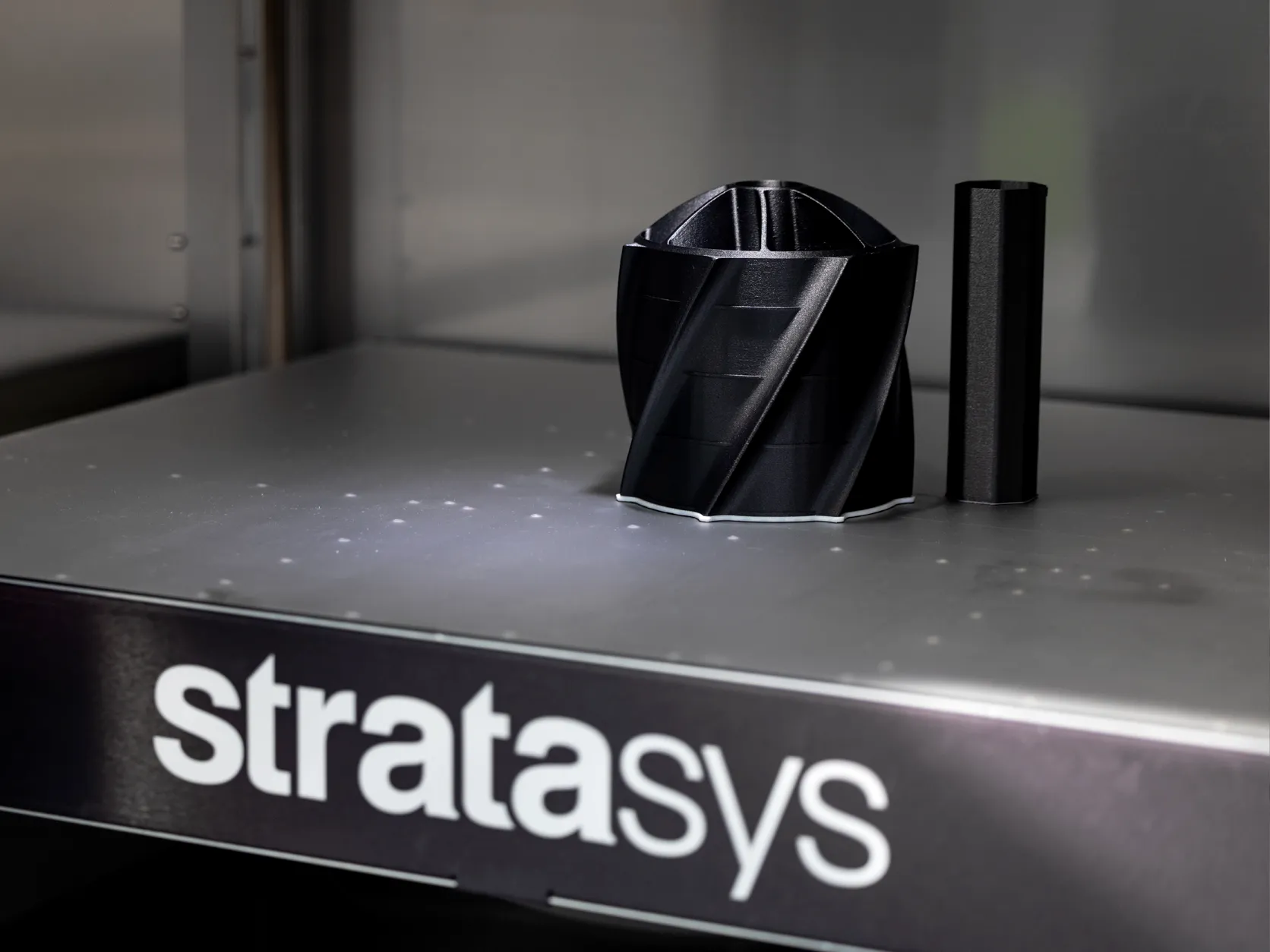
The N20H is a hardened printhead designed to process carbon fiber reinforced FDM Nylon 12CF , allowing for lightweight, yet high strength and rigidity manufacturing aids, devices, and robot arm ends (EOAT).
The N25, on the other hand, focuses on productivity. When using ASA substrate, it can offer up to twice the print performance compared to the N14 printhead.
Quick, tool-free printhead replacement allows the same system to be configured to suit the current production task.
Nine raw materials at launch
The F870 supports nine Stratasys materials at launch, including ASA, ABS-M30, and carbon fiber-reinforced FDM Nylon 12CF with various options.
A particularly important advancement is Nylon 12CF, which combines Nylon 12 with shredded carbon fiber to offer high stiffness and a favorable strength-to-weight ratio. This could be beneficial in applications where previously machined metal tools were used.
All modeling materials with SR-35 water-soluble support material , which allows the production of parts with complex geometries and internal cavities.
When a manufacturing tool doesn't necessarily have to be made of metal
One of the most important applications of the F870 is the in-house production of production aids.
A traditional CNC-machined manufacturing fixture can in some cases be replaced with a 3D printed solution. A welded metal fixture can be replaced with a lightweight construction made of Nylon 12CF, and a multi-part prototype can be produced in a single printing process.
An area of particular interest is robotic arm ends (EOAT). Replacing traditional machined aluminum solutions with carbon fiber-reinforced, lighter alternatives can reduce the mass moved by the robot, while the geometry of the end tool can be precisely tailored to the application.
The technology can offer similar benefits for custom assembly devices, positioning and drilling templates, inspection devices, forming and bending tools, ergonomic work tools or maintenance aids.
From prototype to production line
However, the F870's application area does not end with production aids.
The one-meter build length allows full-scale functional prototypes , even in a single piece. For small series or bridging production, additive technology can provide the opportunity to produce parts until the final series production technology or tooling is available.
By manufacturing replacement parts, covers, brackets, and maintenance tools on demand, companies can in some cases reduce supplier lead times and the resulting production downtime.
F870 can therefore be used in the automotive industry, aerospace industry, industrial manufacturing and consumer product development, .
F770 or F870?
At first glance, it would be easy to see the F870 as a larger successor to the F770, but that's not really the case.
Both systems a build volume of 1000 × 610 × 610 mm and can print parts up to 1171 mm long when placed diagonally.
The F870 advances manufacturing capabilities, offering integrated substrate drying, automatic substrate switching, higher capacity rolls, new N-series printheads, and FDM Nylon 12CF compatibility, all of which enable long, multi-day production runs with minimal operator intervention.
So while the F770 opened up the possibility of large-format industrial FDM 3D printing, the F870 focuses even more firmly on the needs of the manufacturing environment and continuous operational use.
The entire workflow in one system
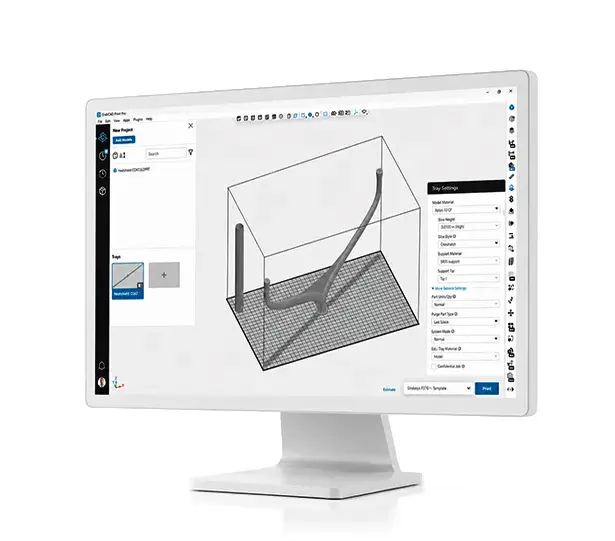
The F870 is GrabCAD™ Print software, which enables the production process to be managed in a single environment, from file preparation to print parameter settings.
The software can be used to optimize print preparation, reduce scrap, and more effectively utilize the capabilities of FDM technology.
Large format FDM – directly in production
The development direction of the F870 is a good example of how the role of industrial 3D printing is changing. The question is less and less about “can we print this part?”and more about how the technology can be effectively integrated into everyday manufacturing.
Long, unattended operation, automatic material handling, a fully heated build chamber, up to twice the print output, and support for carbon fiber-reinforced materials all point in this direction.
And for companies that need large-scale prototypes, custom manufacturing aids, appliances, or functional parts produced in small batches, the F870 can offer a new way to produce these faster, in-house, and with less reliance on external suppliers .
If you would like to learn about effective solutions to the challenges of large-format 3D printing, download our brochure!