
First the task, then the technology: this is how to request 3D printing from VARINEX
The same CAD model can be produced using several 3D printing processes. However, the end result is not necessarily the same: one thing counts for a product model given at a presentation and another for an assembly tool used every day. The choice of technology therefore begins with specifying the task.
VARINEX's contract printing offering includes Stratasys FDM, PolyJet, P3 DLP, SLA, SAF and SLS, as well as the DMLS/SLM process suitable for metal production. The useful question is not which of them is best in general, but which one suits the purpose of the requested part. To do this, it is worth gathering some requirements before requesting a quote.
What does the finished piece have to prove?
A model can be used to judge the shape, to check the buildability or to perform a functional test. These purposes should be stated separately. For example, if we want to test the grip of a cover, the design of the surface and the affected parts may be more important than an internal dimension that is not tested in the test.
For a functional piece, we also describe the load, temperature and expected frequency of use. Critical fits are marked separately on the drawing. This way, the preparation for production does not start from the assumption that every detail of the model must meet the same requirements.
Three procedures, different starting points
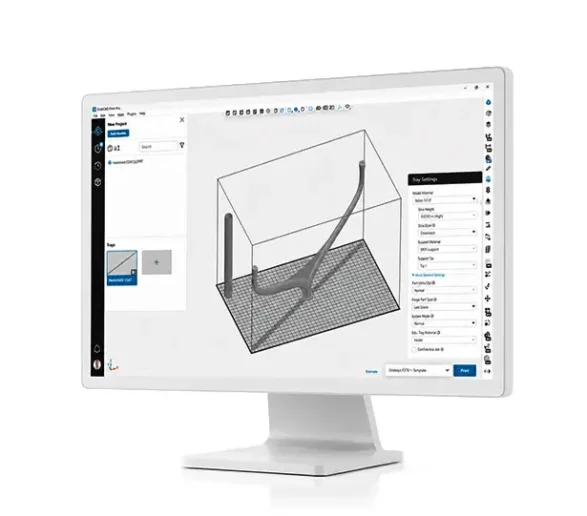
Among the above-mentioned processes, let's take a closer look at the three most popular Stratasys technologies. FDM builds the part layer by layer from thermoplastic filament. The manufacturer recommends Stratasys' ABS-M30 material for prototyping and manufacturing aids, among other things.
PolyJet provides a solution for producing detailed models, even displaying multiple materials or colors. When it comes to deciding on the appearance and handling of a product, such a model answers different questions than a version created for mechanical testing. Visual fidelity alone does not mean identical material properties with the later mass-produced part.
The SAF powder bed process; Stratasys SAF PPA or PA12 is best suited for prototyping and small to medium volume production of functional parts. For repetitive parts, the assembly, cleaning and inspection of the entire print job are also part of the consideration. The three processes are therefore worth comparing for different tasks, not ranking them in a single order.
The request for proposal should also be a usable job description
Next to the model, specify the number of pieces, the desired deadline, important dimensions and surface expectations. Also state whether the first piece is just for testing or will be tested under later conditions of use. If the name of a material is already included in the plan, it is worth giving the reason for it.
Two offers can be meaningfully compared with the same set of requirements. If the number of pieces, surface treatment or inspection requirements change, this must be taken into account in the decision. A cheaper unit price is not the same as a lower total cost of the appropriate solution for the task.
To prepare the job printing requested from VARINEX, send the model and a short description of the use, either by email or via the online cost calculator. A well-defined requirement helps to ensure that the discussion on the technology answers specific production questions and that the finished piece can be evaluated according to predefined criteria.
Have your part made with VARINEX!
Do you have a part design or manufacturing task to solve? Send us the 3D model and usage requirements. The VARINEX team will help you select the right 3D printing technology and material, and provide you with a quote for production.